
Historic sites of Turkey
Historic Sites: 105 places from 59 provinces of Turkey. Each has a model-like miniature, a short story and a Numa Made ring on the Isometric Turkey map.
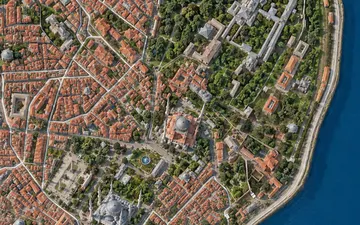
Sultanahmet & Hagia Sophia
When a sultan says “altın minare”, golden minaret, what does the architect hear? Legend has it that Sultan Ahmed I wanted his mosque’s minarets to be made of gold, while his architect…
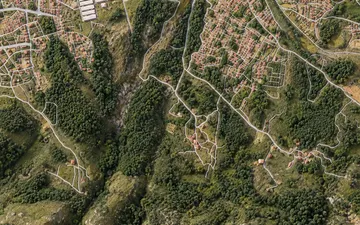
See on the map →Cumalıkızık
How does a village stand in the same place for seven hundred years? Step into the narrow cobbled streets of Cumalıkızık and after a while you stop looking for an answer; for the village…
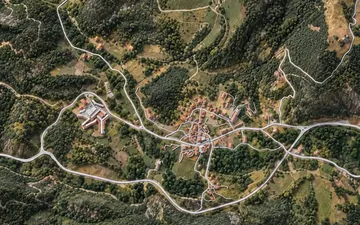
See on the map →Taraklı
“Slowly, slowly you will climb these stairs, / A heap of sun-colored leaves about your skirts…” writes Ahmet Haşim in his poem ‘The Staircase’. Walking the steep streets of Taraklı, which…
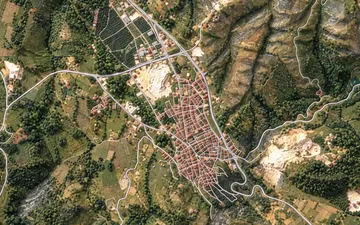
See on the map →Söğüt
Can a state be founded on a dream? If the Ottoman chronicles are to be believed, the answer must be yes… Legend has it that one night, while young Osman was a guest in the house of Sheikh…
See on the map →Metristepe (İnönü)
“There you defeated not only the enemy, but the nation’s ill fate as well.” This was Mustafa Kemal Pasha’s reply to İsmet Pasha, who on April 1, 1921 had telegraphed from Metristepe that…
See on the map →Conkbayırı
“What is this war of the Strait? Has it any equal in the world?” asks Mehmet Akif in his poem ‘To the Martyrs of Çanakkale’. If any place can answer this question, it is surely Conkbayırı…
See on the map →Troy
“Sing, O goddess, the anger of Achilles son of Peleus…” So begins Homer’s ‘Iliad’. Perhaps the very first sentence of Western literature tells the story of a rage; and the place where that…
See on the map →Assos
“All men by nature desire to know.” This is the first sentence of Aristotle’s ‘Metaphysics’. But did you know that the man who wrote it once lived in a city on the volcanic hill of Assos…
See on the map →Seddülbahir & Alçıtepe
“Halt, traveler! This ground you tread unknowing / Is where an age went down.” These lines by Necmettin Halil Onan quietly greet every visitor who comes to the Gallipoli Peninsula. Further…
See on the map →Uzunköprü
How does a bridge give its name to a town? For this town on the banks of the Ergene, the answer is quite simple: the bridge is so long that there was no need to think of another name…
See on the map →Vize
Herodotus, the father of history, says of the Thracians: “After the Indians, the Thracian nation is the largest in the world; were they ruled by one man, or could they unite in one mind…
See on the map →Ephesus
“You cannot step into the same river twice,” says Heraclitus of Ephesus. The city of this dark philosopher, who taught that everything flows and nothing stays the same, became perhaps the…
See on the map →Şirince
What is the surest shortcut to protecting a village from the evil eye? According to the tales, the village’s former inhabitants came up with a rather curious answer: calling their village…
See on the map →Pergamon Acropolis
“Books have their own fates,” says the Latin poet Terentianus Maurus. So how is the fate of a library written? Climb the steep acropolis hill of Pergamon and you can hear the answer in the…
See on the map →Didim & Temple of Apollo
Thales of Miletus, counted among the Seven Sages of the ancient world, was once asked what the hardest thing was. His answer was short and sharp: “To know oneself.” And the easiest? “To…
See on the map →Aphrodisias
“Every block of stone has a statue inside it; it is the task of the sculptor to discover it.” These words, attributed to Michelangelo, were already known as a trade secret at the foot of…
See on the map →Priene
“All that is mine I carry with me.” These words, attributed to Bias of Priene, one of the Seven Sages, are the memory of a day when the city was besieged. As the story goes, when the enemy…
See on the map →Knidos
Would a city sell its most precious possession in exchange for having all its debts wiped away? According to Pliny, King Nicomedes of Bithynia made the Knidians exactly this offer: he would…
See on the map →Pamukkale & Hierapolis
Can you picture a hillside that stays snow-white even in the middle of July, though it never snows? Those who saw it from afar likened it sometimes to a glacier, sometimes to a heap of…
See on the map →Laodicea
In Revelation, the last book of the Bible, there are letters written to seven churches in Anatolia. The last of them is addressed to Laodicea, and it is hardly flattering: the people of the…
See on the map →Buldan & Tripolis
Have you ever imagined that a river could give a word to all the languages of the world? The Büyük Menderes, known in antiquity as the Maiandros, winds and twists so much that the ancients…
See on the map →Sardis
As Herodotus tells it, Croesus, King of Lydia and reckoned the richest ruler in the world, once hosted the Athenian sage Solon at his palace and, after showing him around his treasures…
See on the map →Clandras Bridge
“Call the bear ‘uncle’ until you’ve crossed the bridge,” our ancestors say. But have you ever stopped to wonder how old the bridge itself is, who built it, and who has crossed it? In Uşak…
See on the map →Afyon Castle
Afyonkarahisar · Historic Sites
How does a city forget the color in its own name? For centuries this city was known as Karahisar, the “black castle”, after the dark rock that rises abruptly from the middle of the plain…
See on the map →Kocatepe
Afyonkarahisar · Historic Sites
Would you believe that a nation’s destiny could fit into a single morning? On August 26, 1922, before dawn had even broken, Commander-in-Chief Mustafa Kemal Pasha had climbed the rocks of…
See on the map →Zafertepe (Dumlupınar)
“Armies! Your first goal is the Mediterranean. Forward!” When these three short sentences were put in writing on September 1, 1922, one of Anatolia’s longest summers lay behind them. But…
See on the map →Dumlupınar Martyrs’ Memorial
When a war ends, what does the silence sound like? No one today can fully describe the silence that fell over the Dumlupınar plain on the evening of August 30, 1922; but the martyrs’…
See on the map →Aizanoi
Is complaining about ever-rising prices unique to our own age? Look at the walls of Aizanoi’s round market building and you will see that the answer is no. In 301, the Roman Emperor…
See on the map →Side & Manavgat
Can a city’s name be a fruit? Side’s can. In one of the ancient languages of Anatolia, “side” means pomegranate; that is why the city’s coins bore a pomegranate… So who managed to pack so…
See on the map →Aspendos
Legend has it that the king of Aspendos promised his daughter to whoever gave the city its most beautiful work. Two master builders competed: one built the arches carrying water from the…
See on the map →Perge
Galileo said: “Philosophy is written in this grand book, the universe, which stands continually open to our gaze… It is written in the language of mathematics, and its characters are…
See on the map →Termessos
In the Iliad, describing the hero Bellerophon’s battle with the Solymi, Homer says it was the fiercest fight he ever fought. The Solymi were a people of the mountains; and for centuries the…
See on the map →Demre & Myra
That famous poem attributed to Clement Clarke Moore begins, “’Twas the night before Christmas, when all through the house / Not a creature was stirring, not even a mouse…” and tells of a…
See on the map →Xanthos & Letoon
Herodotus tells what the Xanthians did when the army of the Persian commander Harpagus entered the plain of Xanthos: few as they were, they marched out and fought; when they were beaten…
See on the map →Sagalassos
Can water flow again today from a fountain built two thousand years ago? It may sound like a fairy tale, but at fifteen hundred meters on Akdağ, in a mountain city close to the clouds, that…
See on the map →Kibyra
Strabo writes that the people of Kibyra spoke four languages: Pisidian, Solymian, Greek and Lydian… So in a mountain city where four languages echoed through the same streets, how did…
See on the map →Tarsus
“The barge she sat in, like a burnish’d throne, / Burn’d on the water…” writes Shakespeare in ‘Antony and Cleopatra’. But which water was that barge on? In 41 BC, Cleopatra glided up the…
See on the map →Uzuncaburç
Can a tower give a village its name? In the cool highlands of the Taurus north of Silifke, one village’s answer is written in stone: Uzuncaburç, “the tall tower”. In its center stands a…
See on the map →Alahan Monastery
Where does a person go to turn their back on the world? Some go to the desert, some to an island, some to a mountainside… In the 5th century AD, a group of monks found their answer in the…
See on the map →Anavarza
Have you ever wondered where the roots of a medicine you buy at the pharmacy today might lie? Part of the answer may be at the foot of a rock that rises suddenly in the middle of Çukurova…
See on the map →Kozan Castle
Kozan’s old name is Sis, the Turkish word for fog. It may sound like a misty, hazy town, but the name probably has little to do with the weather; for when you climb the rocky ridge above…
See on the map →Karatepe-Aslantaş
“In places where people once feared to walk the roads, in my days women could walk alone with their spindles in hand.” These words belong to Azatiwada, a lord who ruled at Karatepe some two…
See on the map →Kastabala
Strabo tells how the priestesses of the temple of Artemis Perasia at Kastabala walked barefoot over burning coals without their feet ever being burned… A miracle, a skill, or just a good…
See on the map →Anıtkabir
“Seeing me does not necessarily mean seeing my face. If you understand and feel my ideas and my feelings, that is enough.” Every time I read these words of Mustafa Kemal Atatürk, I think…
See on the map →Duatepe (Polatlı)
“There is no line of defense; there is a surface of defense. That surface is the whole homeland. Not an inch of the homeland may be abandoned until it is soaked with the blood of its…
See on the map →Mount Mangal (Haymana)
“Galloping from farthest Asia / and jutting into the Mediterranean like a mare’s head, / this country is ours,” says Nazım Hikmet in his poem ‘Invitation’. Right in the middle of that…
See on the map →Beypazarı
Say Beypazarı, and some of us think of carrots, some of mineral water, and some of its famous kurusu, the town’s dry rusk. But did you know that one of this little town’s true treasures is…
See on the map →Gordion
How do you undo a knot that no one has ever undone? Do you work at it patiently, loop by loop, or with a single stroke of the sword? In 333 BC, when a young commander came to Gordion, the…
See on the map →Çatalhöyük
Aristotle describes man as a creature drawn by nature to live in a city. So when did people first decide to live together, in a city? Sooner or later, the path of anyone seeking the answer…
See on the map →Sille
A church that has stood for centuries in a valley this close to Mevlânâ’s city… At first glance it may seem surprising; but once you hear Sille’s story, the surprise gives way to another…
See on the map →Kilistra
The Acts of the Apostles tells of a strange incident: when Paul and his companion Barnabas healed a man who had been unable to walk since birth in the city of Lystra in Lycaonia, the people…
See on the map →İvriz Rock Relief
Some two thousand seven hundred years ago, a king had himself carved into the rock beside a spring. But this time the king was not alone; facing him stood a god far larger than he was. So…
See on the map →Taşkale
What would you think if rows of doors and windows opened up in the face of a rock? A castle, a city, or the home of giants? Those who come to the village of Taşkale in Karaman can make…
See on the map →Güzelyurt
In Greece, near Kavala, there is a town called Nea Karvali; the name means “New Karvali”. So where was the old Karvali, and from the shadow of which mountain did this town’s people come?…
See on the map →Selime Cathedral
To build a cathedral, do you haul stone, or do you carve into it? For most of us the answer is obvious: stones are cut, carried, stacked one upon another, and the walls rise. But at the…
See on the map →Gümüşler Monastery
If a town with silver in its very name had kept a treasure hidden underground for centuries, what would you guess that treasure to be? Gold, jewels… or a smile? In Gümüşler, a town in…
See on the map →Hacıbektaş
“Be master of your hand, your tongue and your loins.” This counsel, attributed to Hacı Bektaş Veli, has been on Anatolia’s lips for centuries. Three words; yet weighty enough to last a…
See on the map →Divriği
Can lace be made of stone? Can that delicate work, done with needle and thread, be carried out on hard stone with chisel and hammer? Stand before the portals of the Great Mosque and…
See on the map →Kerkenes
According to Herodotus, before going to war with the Persians, King Croesus of Lydia consulted the oracle at Delphi and received this answer: if he made war on the Persians, he would…
See on the map →Çeşnigir Bridge
The Seljuk palace had a curious office: the çeşnigir. His task was to taste the çeşni, the flavor, of the dishes brought to the sultan’s table; legend has it he was the first to learn…
See on the map →Salt Cave
“The right of salt and bread,” we say in Turkish: to have eaten salt and bread at someone’s table is to owe them loyalty… But did you know that some of the salt that has seasoned our tables…
See on the map →Yazılıkaya & Midas City
What could a king’s greatest secret be? Where his treasure lies, the names of his enemies, or… donkey’s ears? According to legend, that was exactly the secret of the Phrygian king Midas…
See on the map →Sivrihisar
One day they asked Nasreddin Hodja: “Hodja, where is the center of the world?” Without a moment’s thought, the Hodja pointed to the spot where his donkey’s hoof stood: “Right here!” “How do…
See on the map →Seyitgazi
One of the heroes named most often in Anatolia’s epics is Battal Gazi. In the Battalname, told for centuries in village guest rooms and coffeehouses, he is an invincible champion, a warrior…
See on the map →Mudurnu
What makes a town great: the height of its walls, the dome of its mosque, or the honesty of the scales in its shops? Wander the streets of Mudurnu, squeezed into a narrow valley southwest…
See on the map →Göynük
“The father says one thing, fate says another…” Akşemseddin, the tutor who said this to Murad II when he scolded mischievous young Mehmed, “You’ll never amount to anything!”, was proven…
See on the map →Safranbolu
Can a city take its name from a flower? Safranbolu does. Saffron, one of the world’s most precious spices, drawn from the crimson threads at the heart of its purple petals, was once grown…
See on the map →Havza
The clatter of a telegraph machine… At the end of May 1919, in a small spa town south of Samsun, that sound did not stop for days. Telegrams sent from Havza to every corner of the country…
See on the map →Zile Castle
“Veni, vidi, vici.” I came, I saw, I conquered… One of the shortest victory reports in history consists of these three words; today, all over the world, they stand for swift and decisive…
See on the map →Niksar
Can a city’s name hide the trace of an emperor? Niksar’s name comes from the ancient Neokaisareia, “the city of the New Caesar.” Given in honor of an emperor in Roman times, the name was…
See on the map →Hattusa
Some four thousand years ago, Anitta, King of Kussara, razed the city of Hattush to the ground and then laid a curse upon it: whoever rebuilt this city after him, the Storm God of heaven…
See on the map →Alacahöyük
An excavation that began in 1935 in a small village in Çorum was the young Republic reaching out with its own hands to touch the memory of its own soil. Led by Remzi Oğuz Arık and Hamit…
See on the map →Osmancık
It is said that in the 15th century a dervish living in Osmancık, instead of speaking, would only say “meee” like a sheep; and so the people named him Koyun Baba, “Father Sheep.” This…
See on the map →Şebinkarahisar
Can a mineral hide in a town’s name? The “şebin” in Şebinkarahisar is said to come from şap, the alum this land has yielded for centuries. Karahisar, the other half of the name, it owes to…
See on the map →Sümela Monastery
Why would you hang a building on the face of a cliff? Was there no flat ground to be found, or did someone not wish to be found? Sümela’s story, so legend has it, begins with the answer to…
See on the map →Santa Ruins
Why would a village be named “Dumanlı”, the misty one? On the high slopes north of Gümüşhane, mist climbs up from the valleys every afternoon and spreads like a veil over the houses, the…
See on the map →Aydıntepe Underground City
Who builds a city underground, and why? To hide from enemies, to shelter from the freezing cold of winter, or because life inside the earth, out of sight, simply feels safer? The tunnels…
See on the map →Öşvank Church
If you had wished to leave a prayer of stone in a valley a thousand years ago, where would you have placed it? Perhaps by a lake, in the embrace of the mountains, on a slope where only the…
See on the map →Oltu
“A stone is heavy in its own place,” they say. Oltu’s stone rather belies this; it is surprisingly light in the palm, and it leaves home to travel to every corner of the world… So have you…
See on the map →Pertek Castle
“Water sleeps, the enemy never,” they say. For centuries Pertek Castle heeded the second half of this saying and watched for the enemy; yet one day it was not an army at its gates, but the…
See on the map →Palu
When a king has words carved into rock, how many people does he imagine will read them? A hundred, a thousand, or strangers arriving thousands of years after him? The Urartian inscription…
See on the map →Arslantepe & Battalgazi
Five thousand years ago, on a mound at the edge of the Malatya plain, a scribe was sealing the mouth of a storage jar with clay and pressing his seal into it… An ordinary day, an ordinary…
See on the map →Cendere Bridge & Arsameia
Can a brother’s name be erased from history? The Roman Emperor Caracalla tried, after doing away with his brother Geta; his statues were smashed, his name chiseled off inscriptions, his…
See on the map →İshak Paşa Palace
In ‘The Legend of Ararat’, Yaşar Kemal tells of an old law of the mountain: whoever seeks refuge at your door is never given up… A horse, a pasha’s pride and the mountain’s unbending law…
See on the map →Tuzluca Salt Caves
“Ye are the salt of the earth.” Anyone who reads this line from the Gospel can roughly guess how precious salt once was. It is often said, too, that the word “salary” has its roots in the…
See on the map →Ani Ruins
When does a city die? When its walls fall, when its last inhabitant locks the door and leaves, or when there is no one left to speak its name? If it is the last, then Ani never died; for…
See on the map →Hoşap Castle
Hoşap… When you first hear the name it may sound like a joke; yet the word is the Persian “hoş âb”, beautiful water. Indeed, the Turkish name of the stream flowing at the foot of the castle…
See on the map →Ahlat
Can a person’s life fit onto a stone? Their name, their prayer, perhaps their favorite ornament… Wandering among the gravestones of Ahlat, you look for the answer in the tall, slender…
See on the map →Malazgirt
On the morning of 26 August 1071, a Friday, Sultan Alp Arslan is said to have dressed all in white. “If I fall a martyr, let this garment be my shroud,” he is said to have declared… So why…
See on the map →Zeugma
Imagine a face whose eyes follow you into whatever corner you move… It never quite smiles, nor quite grieves; as if it were about to say something and thought better of it at the last…
See on the map →Rumkale
Who builds a castle, who destroys it, who remembers it? Looking at the steep promontory where the Euphrates meets the Merzimen Stream, rather than chasing each answer, let’s first listen to…
See on the map →Yesemek
Imagine walking into a sculptor’s workshop and finding every piece left half-finished… On the bench, a lion whose mane has emerged but whose body still sleeps in the stone, a sphinx with a…
See on the map →Ravanda Castle
How many owners does a castle have in its lifetime? Ask Ravanda, and counting on your fingers would hardly be enough… Standing on a hill above the valley of the Afrin River, this castle…
See on the map →Balıklıgöl & Urfa Castle
“O fire, be coolness and safety upon Abraham!” In Urfa, this command from the Qur’an is not just a line of sacred scripture but the story of a lake that still ripples in the very heart of…
See on the map →Göbeklitepe
“First came the temple, then the city.” This saying, attributed to Klaus Schmidt, the German archaeologist who introduced Göbeklitepe to the world, turned much of what we thought we knew…
See on the map →Harran
Imagine a plain bearing the footprints of a prophet, the defeat of a Roman army, the observations of scholars who mapped the heavens, and domed houses that look like beehives… All on the…
See on the map →Karahantepe
“I embraced so many, calling each a friend / My one faithful love is the black earth,” says Âşık Veysel. To understand the earth’s faithfulness, you need only look at Karahantepe; for this…
See on the map →Malabadi Bridge
Have you ever thought of spending the night inside a bridge? It may sound strange; but for the caravans crossing the Malabadi Bridge, rising over the Batman River, it was perfectly…
See on the map →Hasuni Caves
How many windows can fit on a hillside? Looking at a valley near Silvan, you first think you’re facing an apartment block: doors, hollows and stone windows lined up row on row… Yet what…
See on the map →Midyat
Have you ever imagined drawing silver out as fine as a silk thread and working it like lace? In Midyat this is no dream but a centuries-old craft. In this art called telkâri, or filigree…
See on the map →Dara
What does an emperor think about when he decides to build a city on his frontier? The enemy, water, or how history will remember him? When the Byzantine Emperor Anastasius I had Dara built…
See on the map →Savur
Some towns introduce themselves as the little sibling of a big city; that is why Savur is called “Little Mardin”. But once you’ve seen Savur, you may feel the comparison doesn’t quite do it…
See on the map →Mor Gabriel
Tur Abdin means “the mountain of the servants of God” in Syriac. When a land is given such a name, the life lived there is expected to carry the weight of that name too… So how does a…
See on the map →Hasankeyf
Imagine a city clinging to both sides of a canyon, gazing at the same river for thousands of years… A city whose stones are woven from rock, its streets from caves, its memory from the…
See on the map →Tillo
“God turns all ill to good / Think not He does otherwise / The wise look on and watch / Let us see what the Lord will do / Whatever He does, He does well…” These lines by Erzurumlu İbrahim…
See on the map →






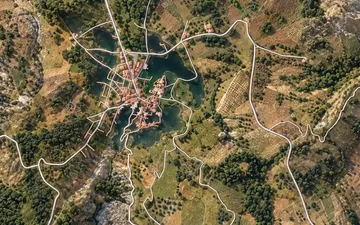
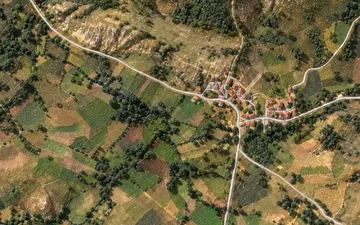
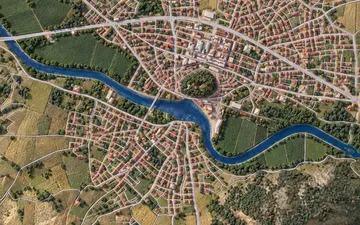
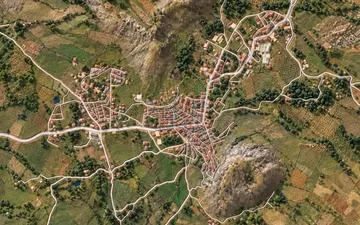








Provinces with this kind of place
- Adana2 places
- Adıyaman1 place
- Afyonkarahisar2 places
- Ağrı1 place
- Aksaray2 places
- Ankara5 places
- Antalya6 places
- Aydın3 places
- Batman1 place
- Bayburt1 place
- Bilecik2 places
- Bitlis1 place
- Bolu2 places
- Burdur1 place
- Bursa1 place
- Çanakkale4 places
- Çankırı1 place
- Çorum3 places
- Denizli3 places
- Diyarbakır2 places
- Edirne1 place
- Elazığ1 place
- Erzurum2 places
- Eskişehir3 places
- Gaziantep3 places
- Giresun1 place
- Gümüşhane1 place
- Iğdır1 place
- Isparta1 place
- Istanbul1 place
- Izmir3 places
- Karabük1 place
- Karaman1 place
- Kars1 place
- Kırıkkale1 place
- Kırklareli1 place
- Kilis1 place
- Konya4 places
- Kütahya3 places
- Malatya1 place
- Manisa1 place
- Mardin4 places
- Mersin3 places
- Muğla1 place
- Muş1 place
- Nevşehir1 place
- Niğde1 place
- Osmaniye2 places
- Sakarya1 place
- Samsun1 place
- Siirt1 place
- Sivas1 place
- Şanlıurfa4 places
- Tokat2 places
- Trabzon1 place
- Tunceli1 place
- Uşak1 place
- Van1 place
- Yozgat1 place